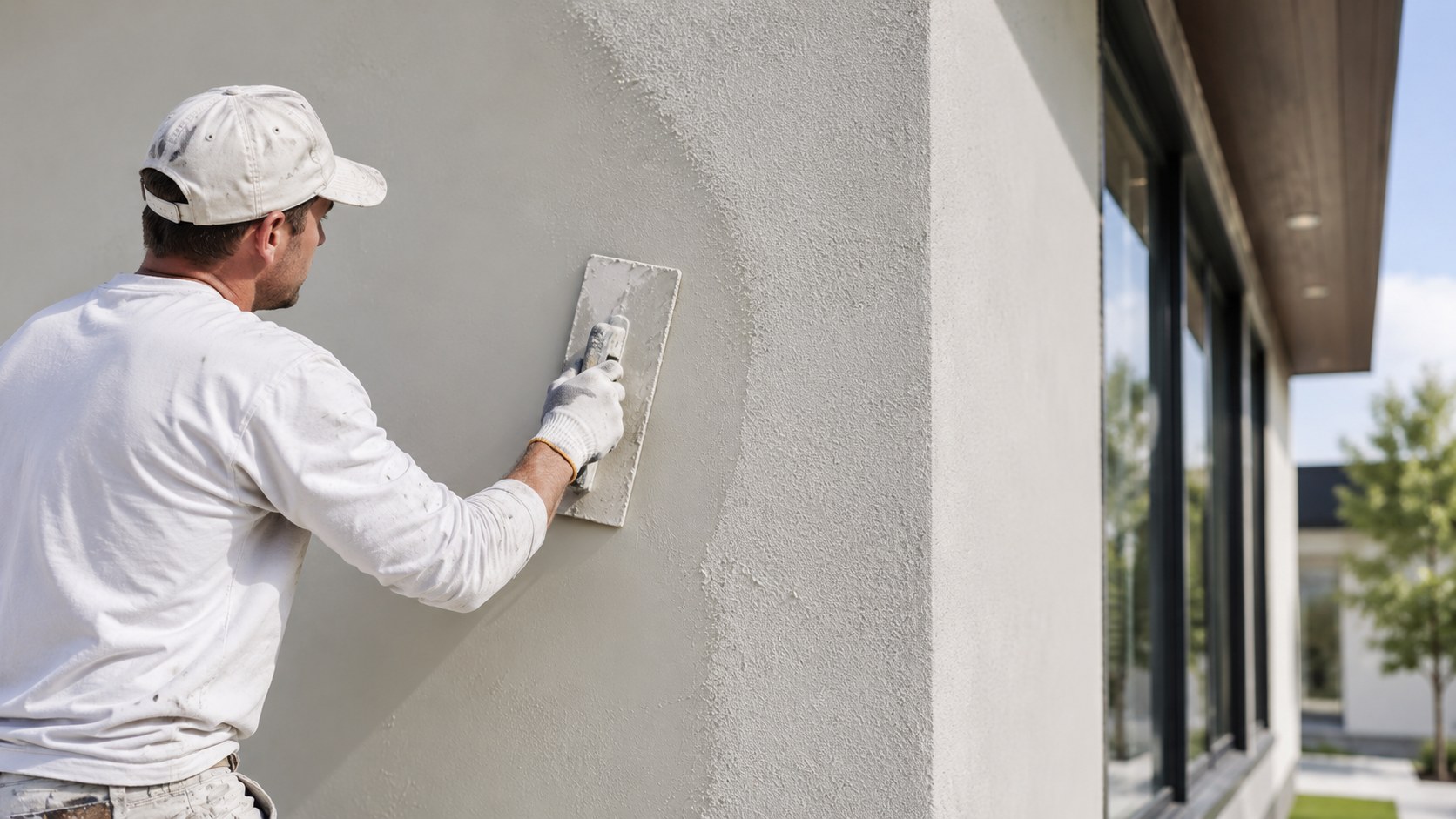
Here’s the useful part: focus on what applies to your home, your budget, and Ontario conditions.
People say “stucco” as if it is one thing. It is more like saying “flooring.” There are different assemblies, finish materials and reasons to choose them. For Mississauga homes, the useful conversation is not which label sounds fanciest. It is what wall system fits the building, the design and the renovation goals.
A plain-English comparison of exterior stucco choices for Mississauga homes, including EIFS, acrylic finishes and traditional stucco assemblies.
Here’s the practical part: use the next section as a checklist, not a rulebook. Every home and project has its own little plot twist.
EIFS: Insulation and Finish Working Together
EIFS commonly combines continuous exterior insulation with reinforced coatings and a decorative finish. Modern drainable systems also address air, moisture and drainage as part of the assembly. The result can be energy-efficient and visually flexible when designed and installed correctly.
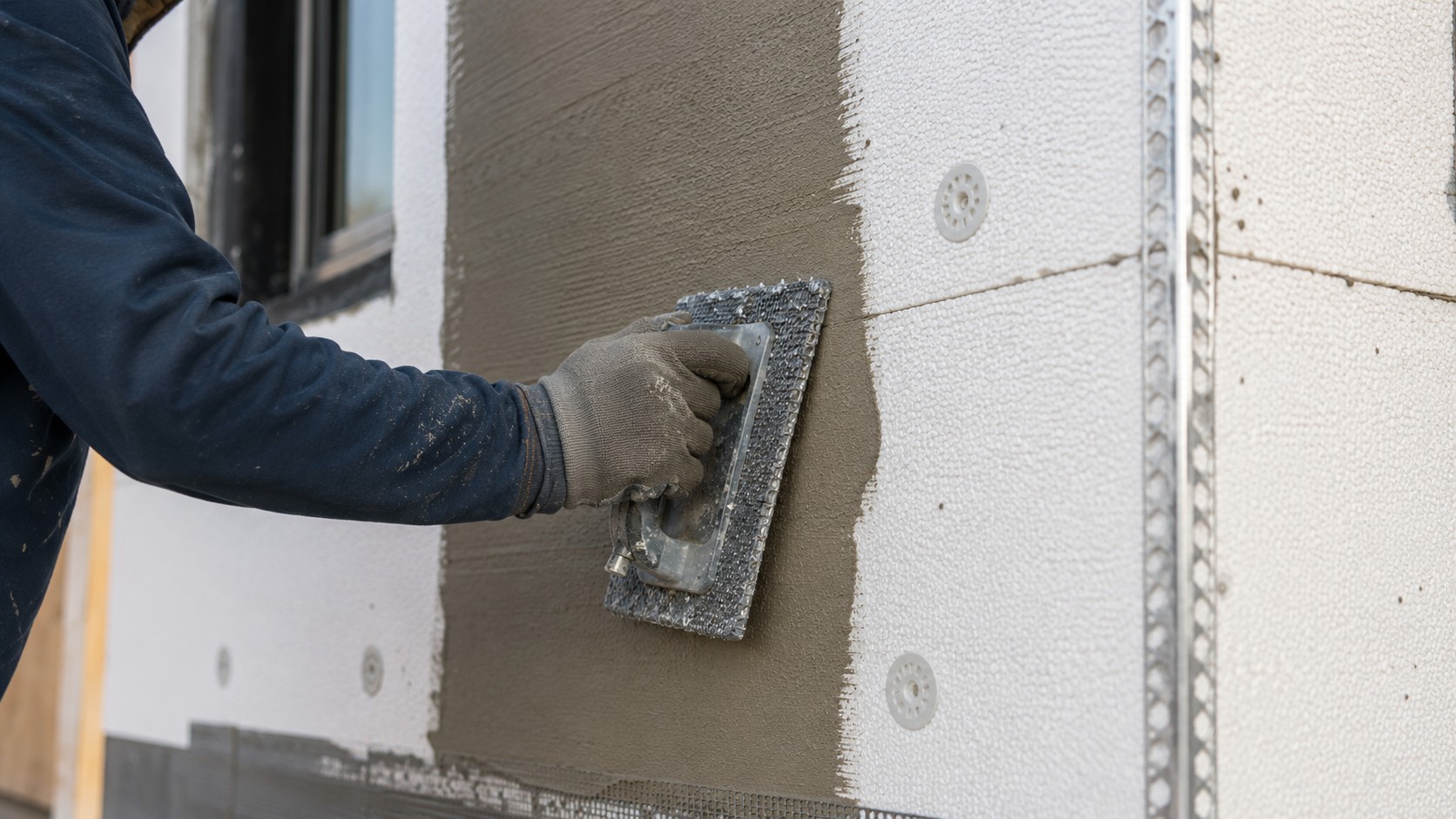
Acrylic Finish: Where Colour and Texture Come Alive
Acrylic finishes are available in multiple textures and a broad colour range. They are commonly used over EIFS and other approved prepared substrates. A smoother look usually asks more from substrate preparation because sunlight is excellent at finding tiny waves nobody noticed at 8 a.m.
Traditional Stucco Still Has a Place
Cement-plaster stucco is a different family of assembly. It can be durable and attractive, but it should not be treated as interchangeable with EIFS. The substrate, reinforcement, drainage approach, thickness and finish all follow the selected system.

Which One Makes Sense for a Renovation?
For a home where exterior insulation and a major facade redesign are priorities, EIFS can make sense. For repairs or recoating, the existing system usually drives the decision. The right answer starts with identifying what is already on the wall.
Good exterior work is usually less dramatic than social media makes it look. Identify the wall system, fix the cause, use compatible materials and do the prep properly. The decorative finish comes last because it has the easiest job when everything underneath is right.
What We Would Check on a Real Project
| Area | What we look for | Why it matters |
|---|---|---|
| Openings | Sealant, flashing, cracks and transitions | Water tends to find complicated details first. |
| Wall field | Flatness, impact damage, staining and old repairs | Helps separate cosmetic work from deeper repairs. |
| Lower walls | Splashback, grading and physical damage | These areas often see more moisture and impact. |
| Finish | Texture, colour, fading and coating condition | Helps decide between spot work and a broader refresh. |
A Manufacturer Video Worth Watching
Manufacturer material is included as a technical reference. It is a better starting point for system details than somebody confidently guessing in a comment section.
Useful Reference
This is original Sky Stucco Systems editorial content. The external reference lets readers check product and system information at the source.
Related Reading
If this topic overlaps with another part of your project, read this related Sky Stucco guide. Keeping repairs, insulation and finish decisions in one plan usually produces a cleaner result than treating every wall issue as a separate emergency.
Send us a few photos and the rough project size.
We can usually tell you what information is useful before a site visit. And yes, we can stop by too. Photos are just a very good head start.